Frameless Torque Motors for Printing Machines
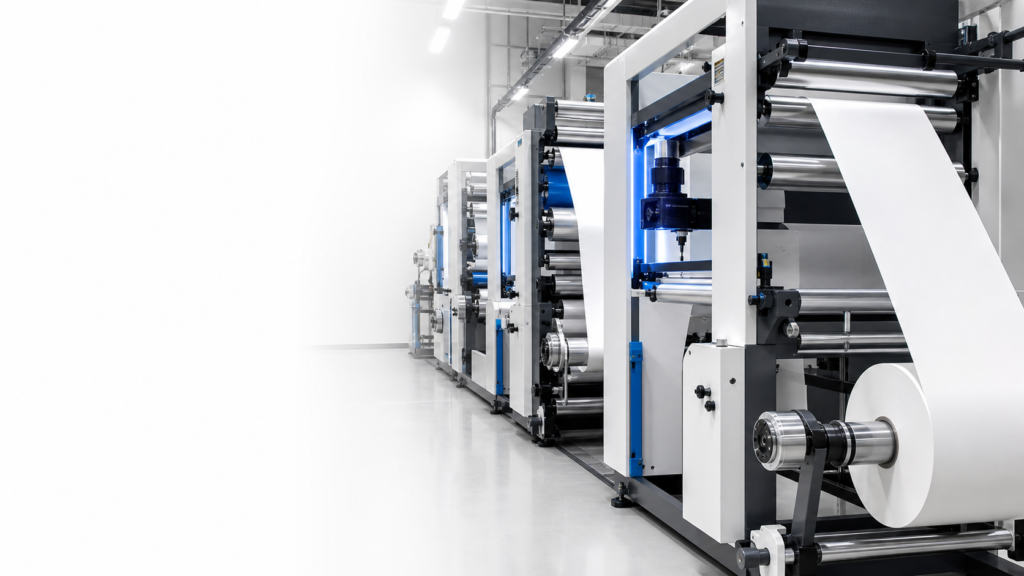
Frameless torque motors provide precise rotary motion for printing machines, labeling systems, web-handling equipment and converting lines.
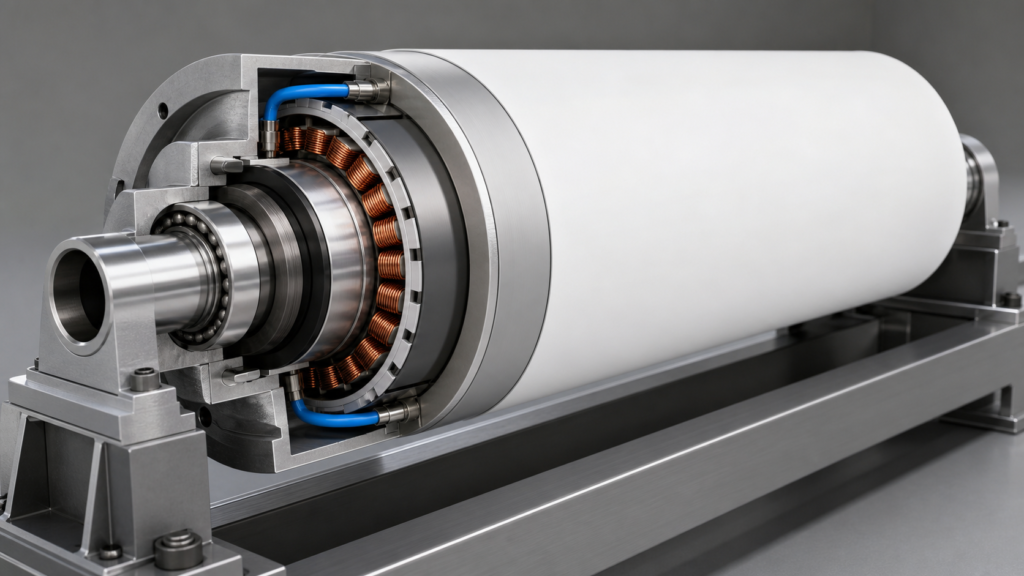
Because the rotor and stator are integrated directly into the machine, the motor can drive a roller, cylinder or rotary axis without a separate housing, gearbox, belt or coupling. This direct-drive structure can reduce mechanical backlash, simplify the transmission system and improve speed synchronization.
Typical applications include printing cylinders, feed rollers, tension-control axes, rotary cutting stations, embossing cylinders and label-handling mechanisms.
Why Are Frameless Motors Used in Printing Equipment?
Printing quality depends on the accurate coordination of multiple moving axes. Small variations in web tension, roller speed or cylinder position can cause registration errors, wrinkles, blurred graphics or wasted material.
A properly designed frameless motor system can provide:
- Accurate roller-speed control
- Smooth low-speed rotation
- Fast acceleration and deceleration
- Direct electronic synchronization
- Reduced transmission backlash
- Compact integration inside rollers
- Fewer belts, gears and couplings
- Flexible encoder placement
The final print accuracy still depends on the encoder, bearings, roller runout, machine stiffness, tension-control system and servo tuning.
Label Printing and Applying Machines
Label production lines must unwind, print, cut, separate and apply material while maintaining accurate web tension.
Frameless motors can be integrated into:
- Unwinding and rewinding rollers
- Label feed mechanisms
- Rotary die-cutting stations
- Printing cylinders
- Registration-control axes
- Label application heads
A hollow-bore motor can also leave space for shafts, air lines, cables or other machine components.
Important selection parameters include web speed, roller diameter, material tension, maximum acceleration and continuous operating temperature.
Flexographic Printing Machines
Flexographic printing requires accurate synchronization between plate cylinders, anilox rollers and impression cylinders.
Direct-drive torque motors can rotate these cylinders without a conventional gear train. This may reduce gear-marking effects, backlash and mechanical wear while allowing electronic adjustment of phase and speed.
For flexographic printing, engineers should consider:
- Cylinder diameter and inertia
- Printing speed
- Required registration accuracy
- Continuous and peak torque
- Web tension
- Bearing arrangement
- Encoder resolution
- Cooling conditions
Digital and 3D Printing Equipment
Frameless motors may be used in industrial digital printers and 3D printing systems to drive rotary build platforms, material-feed rollers, print-head positioning mechanisms and other compact axes.
They are especially useful when the motor must fit around an existing shaft or inside a limited mechanical space.
However, not every 3D printer requires a torque motor. The decision depends on the load, speed, axis structure and required positioning performance.
Embossing and Foil Stamping Machines
Embossing and foil stamping equipment must maintain controlled pressure and accurate angular alignment between rollers or cylinders.
Frameless torque motors can drive:
- Embossing cylinders
- Foil-feed rollers
- Rotary stamping stations
- Material-tension axes
- Indexing mechanisms
High peak torque may be required during pressing, while smooth speed control is important for consistent patterns across the complete production run.
Selecting a Motor for Printing Equipment
Provide the following information:
- Roller or cylinder diameter
- Load inertia
- Continuous and peak torque
- Maximum speed
- Acceleration time
- Web tension
- Operating voltage
- Available outer and inner diameter
- Maximum axial length
- Encoder requirement
- Cooling method
- Duty cycle
Motor Dr Printing Motor Solutions
Motor Dr develops standard and customized frameless motor kits for printing and converting equipment.
Available customization includes motor diameter, hollow bore, stack length, winding, voltage, torque-speed characteristics, lead wires, Hall sensors, temperature sensors and encoder matching.
Our broader product platform covers stator diameters from 12 to 200 mm, torque requirements from approximately 0.004 to 50 Nm and voltage configurations from 12 to 220 V. Final availability depends on the motor dimensions, speed, cooling and duty cycle.
Frequently Asked Questions
Can a frameless motor be installed inside a printing roller?
Yes. The stator and rotor can be designed around the roller shaft and bearing structure if sufficient installation and cooling space is available.
Does direct drive improve print registration?
It can remove transmission backlash and belt-related compliance, but total registration performance still depends on feedback, mechanics and control tuning.
Can Motor Dr customize a motor around an existing roller?
Yes. Send us the roller dimensions, speed, torque, voltage, web tension and installation drawing for evaluation.
Developing a printing or labeling machine? Send Motor Dr your roller dimensions, speed and tension requirements for a custom motor evaluation.