Frameless Motors for Consumer Electronics
Frameless motors can provide compact and precisely controlled motion inside consumer electronics when a conventional housed motor occupies too much space or limits the product’s mechanical design.
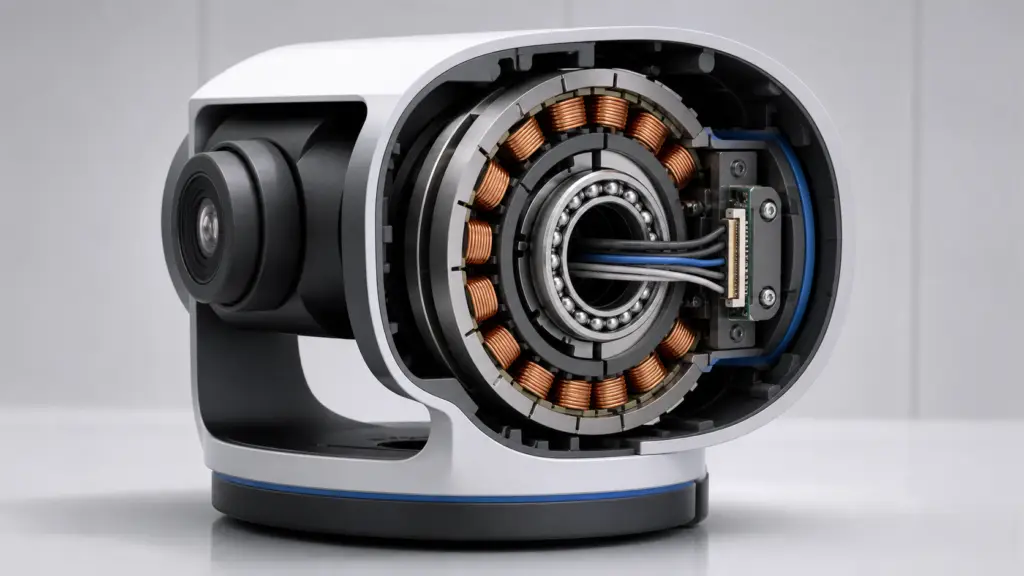
Because the stator and rotor are integrated directly into the product structure, engineers can build the motor around the available diameter, thickness, shaft and moving mechanism.
This approach is particularly useful for high-value electronic products requiring quiet operation, smooth movement, responsive control or a non-standard form factor.
Where Are Frameless Motors Used in Consumer Products?
Potential applications include:
- Motorized camera mounts
- Pan-and-tilt camera systems
- Smart displays
- Premium audio equipment
- Haptic controllers
- VR and simulation equipment
- Smart locks
- Home-service robots
- Compact scanners
- Desktop automation equipment
Frameless motors are not automatically the best choice for every small electronic device. They offer the greatest value when mechanical integration, smooth torque and dimensional flexibility are more important than using a simple off-the-shelf motor.
Cameras and Optical Equipment
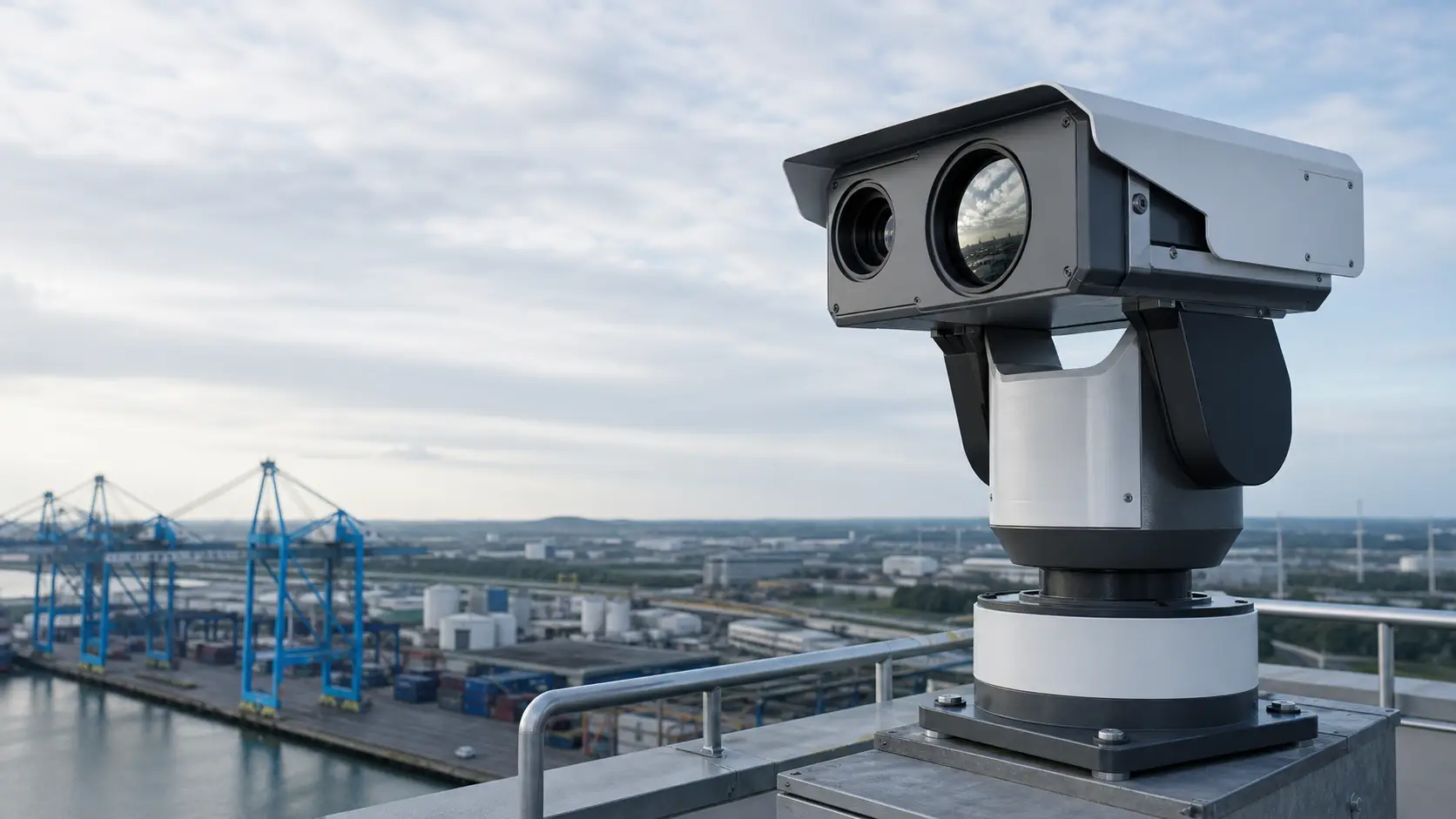
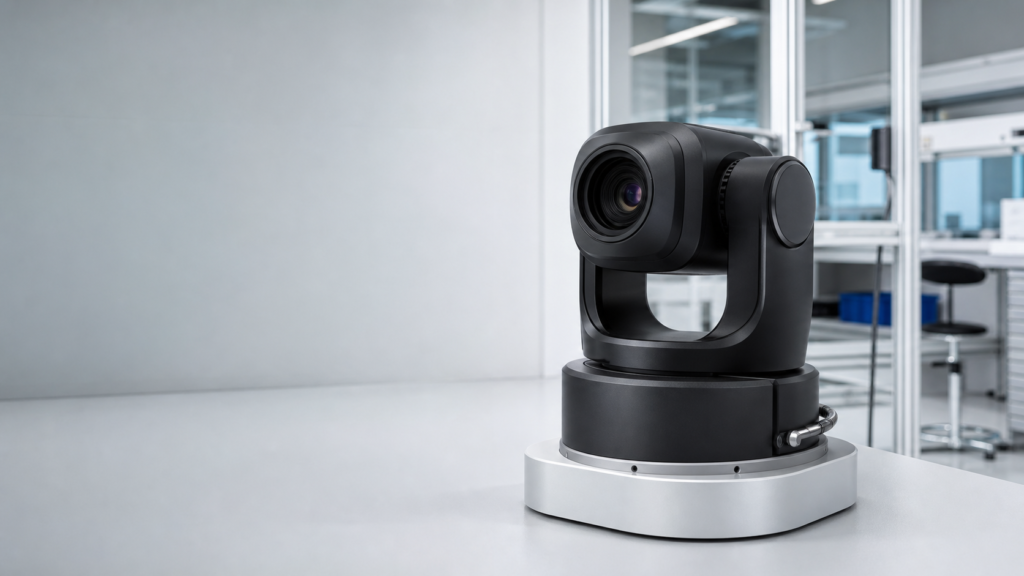
Camera systems often require smooth rotation, low vibration and precise positioning. Transmission backlash or torque ripple can affect image stability, tracking and repeatability.
A frameless motor can be integrated around the camera axis to create a compact pan, tilt or roll mechanism. A hollow center may also be used to route power, video and sensor cables through the rotating axis.
Typical uses include:
- PTZ cameras
- Professional imaging systems
- Camera gimbals
- Optical tracking devices
- Motorized lens or filter mechanisms
The final design should consider cogging torque, rotor inertia, encoder resolution, bearing accuracy and controller bandwidth.
Gaming, Simulation and Virtual Reality
Gaming and simulation systems use motorized mechanisms to reproduce resistance, vibration and physical feedback.
Frameless torque motors can be used in premium force-feedback devices where smooth torque generation and fast response are required. Integrating the motor directly into the steering, pivot or control axis can reduce unnecessary transmission components.
Possible applications include:
- Force-feedback steering wheels
- Flight simulation controls
- Training simulators
- Haptic input devices
- Motorized VR mechanisms
Motor selection should be based on the required continuous torque, peak torque, response time, rotational range and allowable surface temperature.
Smart Home and Home Automation
Smart home products increasingly include motorized cameras, locks, screens, furniture and robotic mechanisms.
A customized frameless motor may be useful when the motor needs to fit around a lock cylinder, hinge, rotary camera axis or other existing product feature.
Design priorities often include:
- Low audible noise
- Low standby power
- Compact axial length
- Smooth starting and stopping
- Long service life
- Compatibility with low-voltage electronics
Why Use a Customized Motor?
Consumer electronics are frequently designed around strict size, appearance and user-experience requirements. A standard motor may provide the correct torque but fail to fit the available space.
Motor Dr can adjust:
- Outer and inner diameter
- Axial length
- Winding and operating voltage
- Torque and speed characteristics
- Lead wire direction and length
- Hall sensors
- Temperature sensing
- Rotor and stator interfaces
- Encoder integration
This allows the motor to become part of the product architecture instead of an additional component that the product must be redesigned around.
Key Information for Motor Selection
To evaluate a consumer electronics project, provide:
- Available installation space
- Required torque and speed
- Operating voltage
- Motion angle or number of rotations
- Noise requirement
- Duty cycle
- Product surface temperature limit
- Expected annual quantity
- Encoder or Hall-sensor requirement
- Target product lifetime
For battery-powered products, current consumption, efficiency and operating time should also be defined early.
Motor Dr Solutions for Consumer Electronics
Motor Dr provides standard and custom brushless frameless motor solutions for compact electronic mechanisms. We support development from initial motor sizing to prototypes and production-stage optimization.
Our solutions may include:
- Frameless motor kits
- Hollow-bore motor designs
- Slotless or low-cogging configurations
- Custom windings
- Encoders
- Compact rotary modules
- Application-specific mechanical interfaces
Frequently Asked Questions
Are frameless motors suitable for battery-powered devices?
They can be, but the motor must be designed around voltage, current limit, duty cycle and battery capacity. Efficiency must be evaluated at the actual operating point.
Can a frameless motor operate quietly?
Frameless motors can support quiet operation, but acoustic performance also depends on commutation, bearings, mechanical resonance and controller tuning.
Can the motor dimensions be customized?
Yes. Outer diameter, inner diameter, stack length, winding and mounting interfaces can be adapted to the product structure.
Frameless Motors for Consumer Electronics
Frameless motors can provide compact and precisely controlled motion inside consumer electronics when a conventional housed motor occupies too much space or limits the product’s mechanical design.
Because the stator and rotor are integrated directly into the product structure, engineers can build the motor around the available diameter, thickness, shaft and moving mechanism.
This approach is particularly useful for high-value electronic products requiring quiet operation, smooth movement, responsive control or a non-standard form factor.
Where Are Frameless Motors Used in Consumer Products?
Potential applications include:
- Motorized camera mounts
- Pan-and-tilt camera systems
- Smart displays
- Premium audio equipment
- Haptic controllers
- VR and simulation equipment
- Smart locks
- Home-service robots
- Compact scanners
- Desktop automation equipment
Frameless motors are not automatically the best choice for every small electronic device. They offer the greatest value when mechanical integration, smooth torque and dimensional flexibility are more important than using a simple off-the-shelf motor.
Cameras and Optical Equipment
Camera systems often require smooth rotation, low vibration and precise positioning. Transmission backlash or torque ripple can affect image stability, tracking and repeatability.
A frameless motor can be integrated around the camera axis to create a compact pan, tilt or roll mechanism. A hollow center may also be used to route power, video and sensor cables through the rotating axis.
Typical uses include:
- PTZ cameras
- Professional imaging systems
- Camera gimbals
- Optical tracking devices
- Motorized lens or filter mechanisms
The final design should consider cogging torque, rotor inertia, encoder resolution, bearing accuracy and controller bandwidth.
Gaming, Simulation and Virtual Reality
Gaming and simulation systems use motorized mechanisms to reproduce resistance, vibration and physical feedback.
Frameless torque motors can be used in premium force-feedback devices where smooth torque generation and fast response are required. Integrating the motor directly into the steering, pivot or control axis can reduce unnecessary transmission components.
Possible applications include:
- Force-feedback steering wheels
- Flight simulation controls
- Training simulators
- Haptic input devices
- Motorized VR mechanisms
Motor selection should be based on the required continuous torque, peak torque, response time, rotational range and allowable surface temperature.
Smart Home and Home Automation
Smart home products increasingly include motorized cameras, locks, screens, furniture and robotic mechanisms.
A customized frameless motor may be useful when the motor needs to fit around a lock cylinder, hinge, rotary camera axis or other existing product feature.
Design priorities often include:
- Low audible noise
- Low standby power
- Compact axial length
- Smooth starting and stopping
- Long service life
- Compatibility with low-voltage electronics
Why Use a Customized Motor?
Consumer electronics are frequently designed around strict size, appearance and user-experience requirements. A standard motor may provide the correct torque but fail to fit the available space.
Motor Dr can adjust:
- Outer and inner diameter
- Axial length
- Winding and operating voltage
- Torque and speed characteristics
- Lead wire direction and length
- Hall sensors
- Temperature sensing
- Rotor and stator interfaces
- Encoder integration
This allows the motor to become part of the product architecture instead of an additional component that the product must be redesigned around.
Key Information for Motor Selection
To evaluate a consumer electronics project, provide:
- Available installation space
- Required torque and speed
- Operating voltage
- Motion angle or number of rotations
- Noise requirement
- Duty cycle
- Product surface temperature limit
- Expected annual quantity
- Encoder or Hall-sensor requirement
- Target product lifetime
For battery-powered products, current consumption, efficiency and operating time should also be defined early.
Motor Dr Solutions for Consumer Electronics
Motor Dr provides standard and custom brushless frameless motor solutions for compact electronic mechanisms. We support development from initial motor sizing to prototypes and production-stage optimization.
Our solutions may include:
- Frameless motor kits
- Hollow-bore motor designs
- Slotless or low-cogging configurations
- Custom windings
- Encoders
- Compact rotary modules
- Application-specific mechanical interfaces
Frequently Asked Questions
Are frameless motors suitable for battery-powered devices?
They can be, but the motor must be designed around voltage, current limit, duty cycle and battery capacity. Efficiency must be evaluated at the actual operating point.
Can a frameless motor operate quietly?
Frameless motors can support quiet operation, but acoustic performance also depends on commutation, bearings, mechanical resonance and controller tuning.
Can the motor dimensions be customized?
Yes. Outer diameter, inner diameter, stack length, winding and mounting interfaces can be adapted to the product structure.
Share your product dimensions, voltage, torque and motion requirements to evaluate a compact custom motor solution.