Frameless Torque Motors for Food and Beverage Machinery
Frameless torque motors can provide compact, controlled motion in food and beverage packaging, conveying, filling, sealing, labeling and cutting equipment.
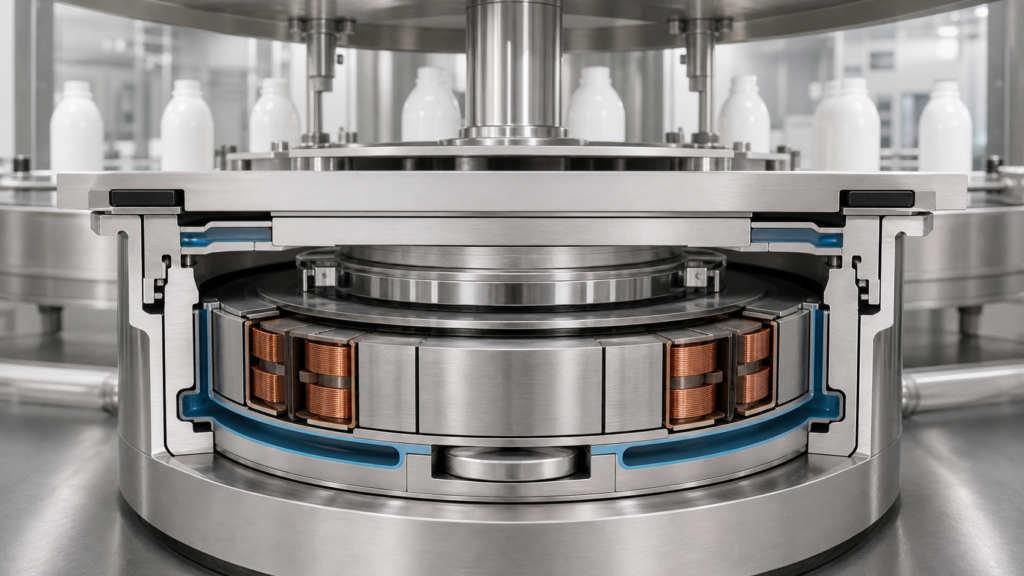
Instead of mounting a complete housed motor outside the machine, engineers can integrate the rotor and stator into a roller, rotary table, filling turret or cutting mechanism.
This approach can reduce transmission components and make the machine architecture more compact. Hygienic performance, however, depends on the complete enclosure, materials, sealing and cleaning design—not on the motor kit alone.
Where Are Frameless Motors Used?
Potential applications include:
- Filling and capping machines
- Form-fill-seal equipment
- Labeling systems
- Rotary packaging machines
- Conveyor rollers
- Product-spacing systems
- Slicing and portioning equipment
- Inspection and reject mechanisms
- Robotic pick-and-place units
Packaging Machines
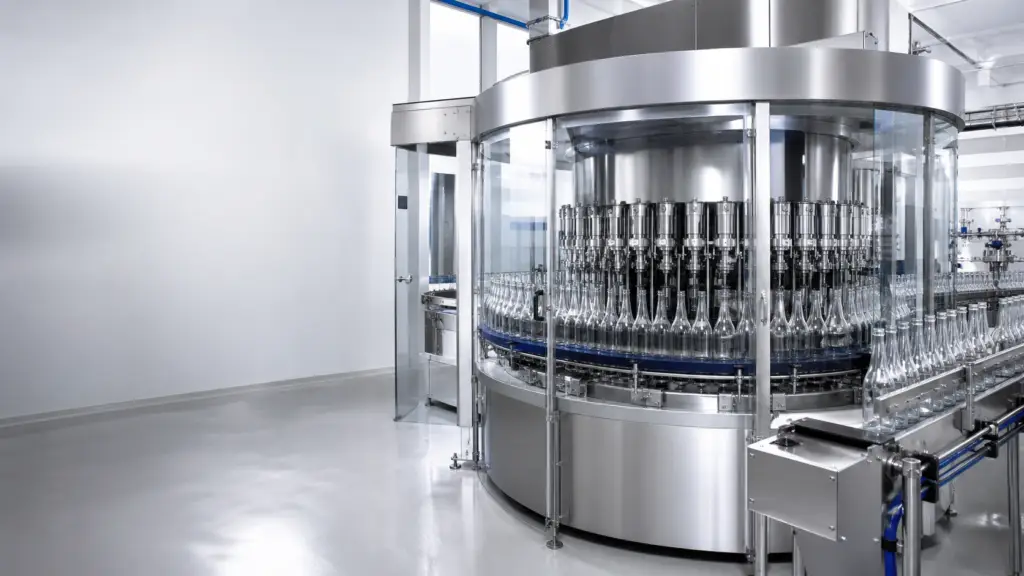
Modern packaging machines perform repeated filling, folding, sealing, cutting and indexing movements at high cycle rates.
Frameless motors can drive rotary stations directly, reducing the need for belts, gears and couplings. Independent servo-controlled axes also make it easier to adjust motion profiles when the machine changes between package sizes.
Applications include:
- Bag-making machines
- Bottle-filling equipment
- Capping stations
- Cartoning machines
- Tray-sealing equipment
- Rotary indexing tables
- Product-orientation mechanisms
The motor must be selected according to actual acceleration, load inertia and cycle time—not only rated torque.
Conveyor and Product-Handling Systems
Food and beverage products must move through production lines without collisions, tipping or excessive pressure.
Frameless motors can be integrated into conveyor rollers, spacing mechanisms and sorting modules. Direct torque and speed control can help coordinate product flow through filling, inspection, labeling and packaging stations.
For conveyor applications, engineers should define:
- Roller diameter
- Conveyor speed
- Product weight
- Starting torque
- Acceleration requirement
- Continuous operating time
- Washdown exposure
Slicing, Cutting and Portioning Machines
Slicing and portioning equipment requires repeatable blade or product positioning to maintain consistent dimensions.
Frameless motors can drive rotary cutters, indexing tables, feeding rollers and product-positioning mechanisms. Fast response can support rapid production changes, while direct drive removes gearbox backlash from the driven axis.
The complete design must account for cutting force, shock load, contamination, cleaning chemicals and operator safety.
Hygienic and Washdown Considerations
A standard frameless motor is not automatically food-grade or washdown-ready.
The machine manufacturer must evaluate:
- Stainless-steel or protected external surfaces
- Ingress protection
- Shaft and bearing seals
- Food-safe lubricants
- Drainage and cleanability
- Chemical resistance
- Condensation
- Motor heat dissipation
One advantage of the frameless design is that the motor can be enclosed inside the machine structure, separating the electromagnetic components from the processing environment.
Motor Dr Solutions for Food Machinery
Motor Dr can customize motor outer diameter, inner diameter, axial length, winding, voltage, torque, speed, cable direction, sensors and mechanical interfaces.
We can also evaluate motors for rotary modules, robot joints and compact automation mechanisms used in food production lines.
Frequently Asked Questions
Is a frameless motor itself waterproof?
No. Waterproofing and washdown resistance depend on the completed enclosure, seals, cables and connectors.
Can frameless motors operate continuously?
Yes, if continuous torque, winding temperature and cooling are correctly calculated for the operating cycle.
Can one motor platform support different package sizes?
Potentially. The motor and controller can support programmable motion profiles, but the required torque and inertia range must be evaluated.
Send Motor Dr your machine layout, cycle time, torque, speed and cleaning requirements to discuss a custom food-processing motor.