Frameless Torque Motors for Medical Equipment
Frameless torque motors are used in medical equipment when the motion system must be compact, smooth, accurately controlled and mechanically integrated into the device.
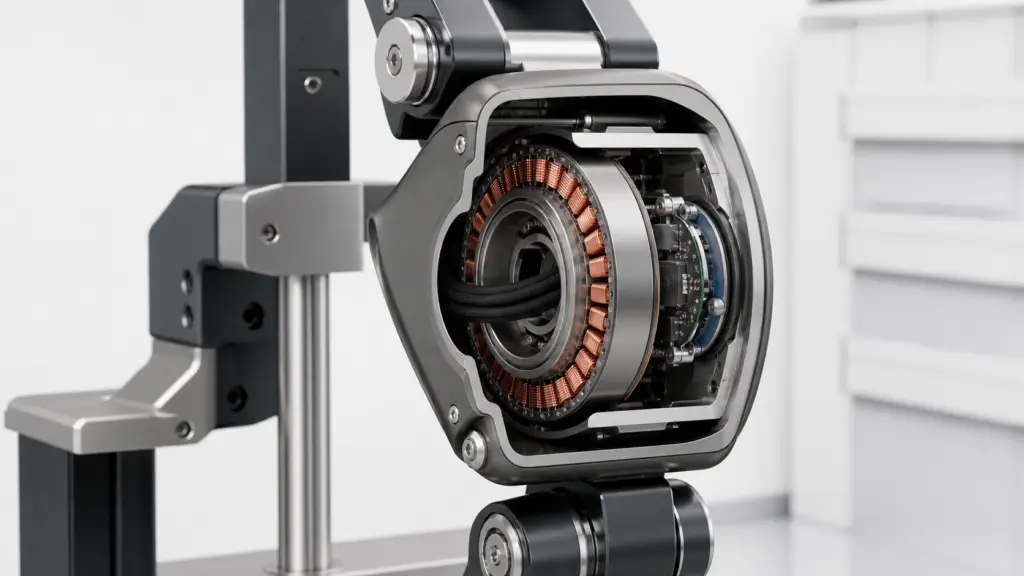
The rotor and stator are supplied without a conventional housing, shaft or bearing system. This allows the medical-device manufacturer to integrate the motor into its own mechanism and control the complete structure, including bearings, enclosure, feedback and thermal path.
Final suitability must be verified as part of the complete medical device, including safety, electrical, thermal, EMC, cleaning and regulatory requirements.
Surgical Robotics
Surgical robotic systems require controlled, repeatable movement while operating within a limited mechanical envelope.
Frameless motors can be integrated into robotic arm and instrument-positioning joints, helping reduce joint size and transmission complexity. Combined with encoders and an appropriate control system, they can support smooth velocity, position and torque control.
Potential applications include:
- Surgical robot arm joints
- Instrument-positioning mechanisms
- Camera positioning systems
- Robotic endoscope systems
- Operator control interfaces
Low cogging torque, low vibration, cable routing and thermal management are especially important in these applications.
Laboratory Automation
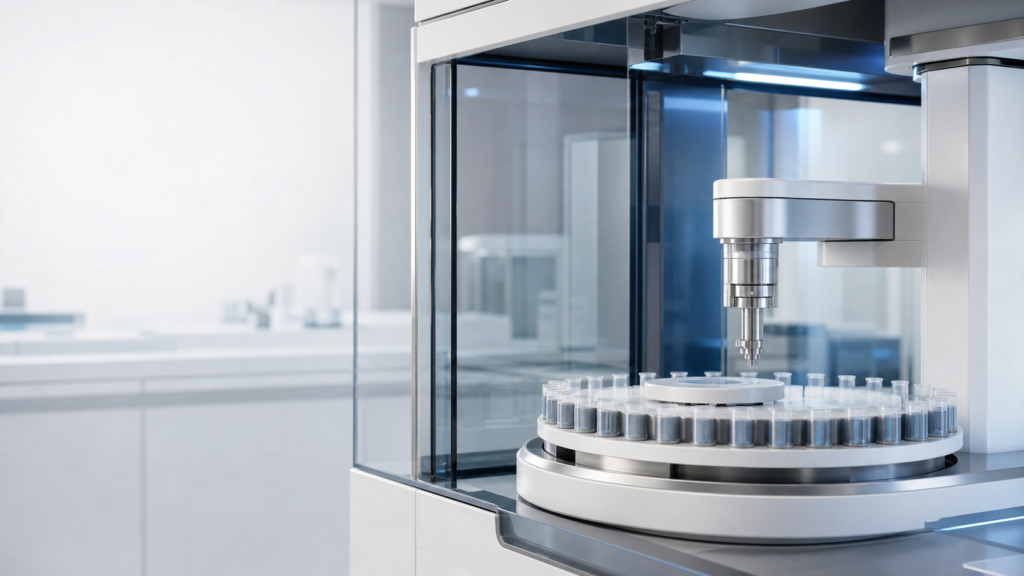
Laboratory equipment uses automated motion to handle samples, position containers and operate around the clock.
Frameless motors can drive:
- Sample-handling robots
- Rotary carousels
- Tube-positioning systems
- Centrifuge mechanisms
- Liquid-handling platforms
- Automated analyzers
The appropriate motor depends on cycle time, load, positioning accuracy, contamination control and operating environment.
Medical Imaging and Patient Positioning
Imaging systems often need to position patients, detectors, cameras or supporting mechanisms smoothly and predictably.
Frameless motors may be used in rotary and positioning axes where compact integration and controlled movement are required. However, applications near sensitive imaging equipment require system-specific evaluation of electromagnetic compatibility, materials and installation location.
The motor should not be described as suitable for MRI or other sensitive environments without complete engineering verification.
Rehabilitation Devices and Exoskeletons
Rehabilitation robots and powered orthotic devices must generate assistance while remaining comfortable and responsive.
Customized frameless motors can be designed around hip, knee, ankle, shoulder or elbow mechanisms. Key design factors include:
- Continuous assistance torque
- Peak support torque
- Total joint weight
- Range of motion
- Surface temperature
- Audible noise
- Battery voltage
- Emergency backdrivability requirements
Depending on the application, the motor may operate through a reducer or within a low-reduction joint.
Medical Assembly Automation
Medical products must be assembled with consistent process control and traceability.
Frameless motors can be integrated into automation equipment used for:
- Precision dispensing
- Rotary indexing
- Robotic assembly
- Device testing
- Inspection systems
- Packaging and labeling
- Prosthetic-component assembly
Direct-drive configurations can simplify the mechanical structure and reduce transmission maintenance in repetitive production equipment.
Important Motor Design Parameters
A medical motor project should define:
- Available motor dimensions
- Continuous and peak torque
- Speed and motion profile
- Voltage and current limits
- Duty cycle
- Noise and vibration targets
- Permitted temperature rise
- Encoder requirements
- Cleaning or sterilization exposure
- Materials restrictions
- Expected life and production volume
Sterilization resistance, biocompatibility and ingress protection are properties of the complete validated design—not automatic properties of a standard frameless motor.
Motor Dr Custom Medical Motor Solutions
Motor Dr develops customized brushless frameless motors for medical-device manufacturers and automation integrators.
Customization can include:
- Compact or low-profile geometry
- Hollow-bore design
- Custom windings and voltage
- Low-cogging electromagnetic design
- Lead wires and connectors
- Hall and temperature sensors
- Encoder integration
- Custom rotor and stator interfaces
- Joint-module development
We support prototype evaluation and design refinement before production.
Frequently Asked Questions
Are Motor Dr motors certified as complete medical devices?
A motor is a component. The medical-device manufacturer is responsible for qualification and certification of the complete system.
Can the motor be designed for low noise?
Yes. Electromagnetic design can be optimized, but total noise also depends on bearings, structure, commutation and controller tuning.
Can materials and wiring be customized?
Yes. Material, winding, sensor, cable and connector requirements can be reviewed according to the project specification.
Discuss your medical motion requirements with our engineering team before finalizing the device architecture.