Frameless Torque Motors for Industrial Automation
Frameless torque motors provide compact, controllable rotary motion for automated equipment such as packaging machines, printing systems, rotary tables, robotic grippers and material-handling mechanisms.
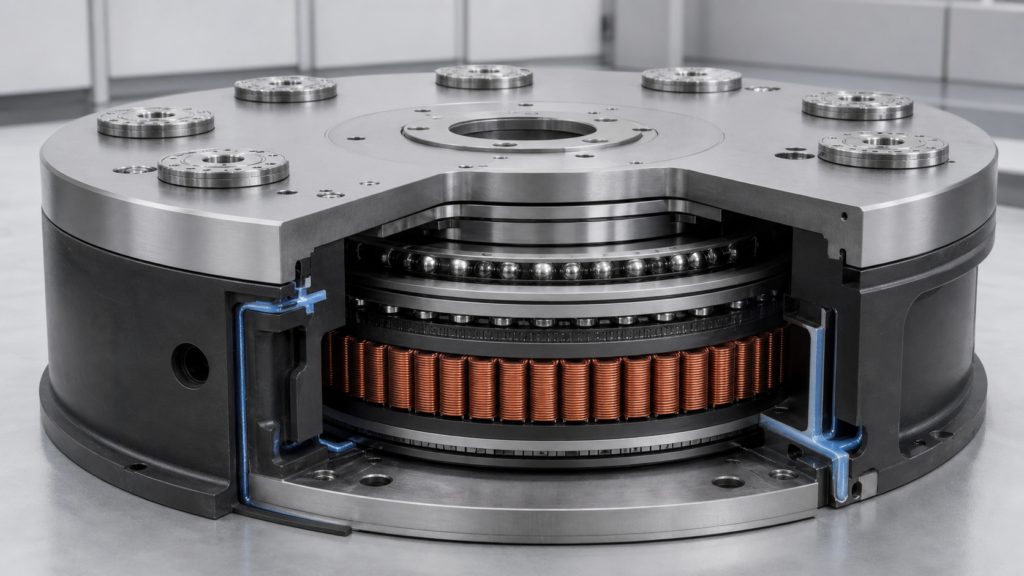
By integrating the rotor and stator into the machine structure, engineers can reduce the space occupied by a separate motor housing and gain more flexibility over shaft, bearing and feedback design.
When used in a direct-drive axis, the motor can also eliminate gears, belts and couplings that may introduce backlash, compliance and maintenance.
Why Use Direct Drive in Automation Equipment?
Automated machinery frequently performs the same movement thousands or millions of times. Positioning errors, transmission wear and unplanned maintenance can therefore affect both product quality and production output.
A direct-drive frameless motor can offer:
- No gearbox backlash in the driven axis
- Fewer transmission components
- Smooth acceleration and deceleration
- Precise electronic speed control
- High torque at low operating speed
- Compact machine integration
- Reduced mechanical maintenance
- Flexible encoder placement
Whether direct drive is appropriate depends on the load inertia, speed range, peak torque, disturbance forces and cost target.
Printing and Labeling Equipment
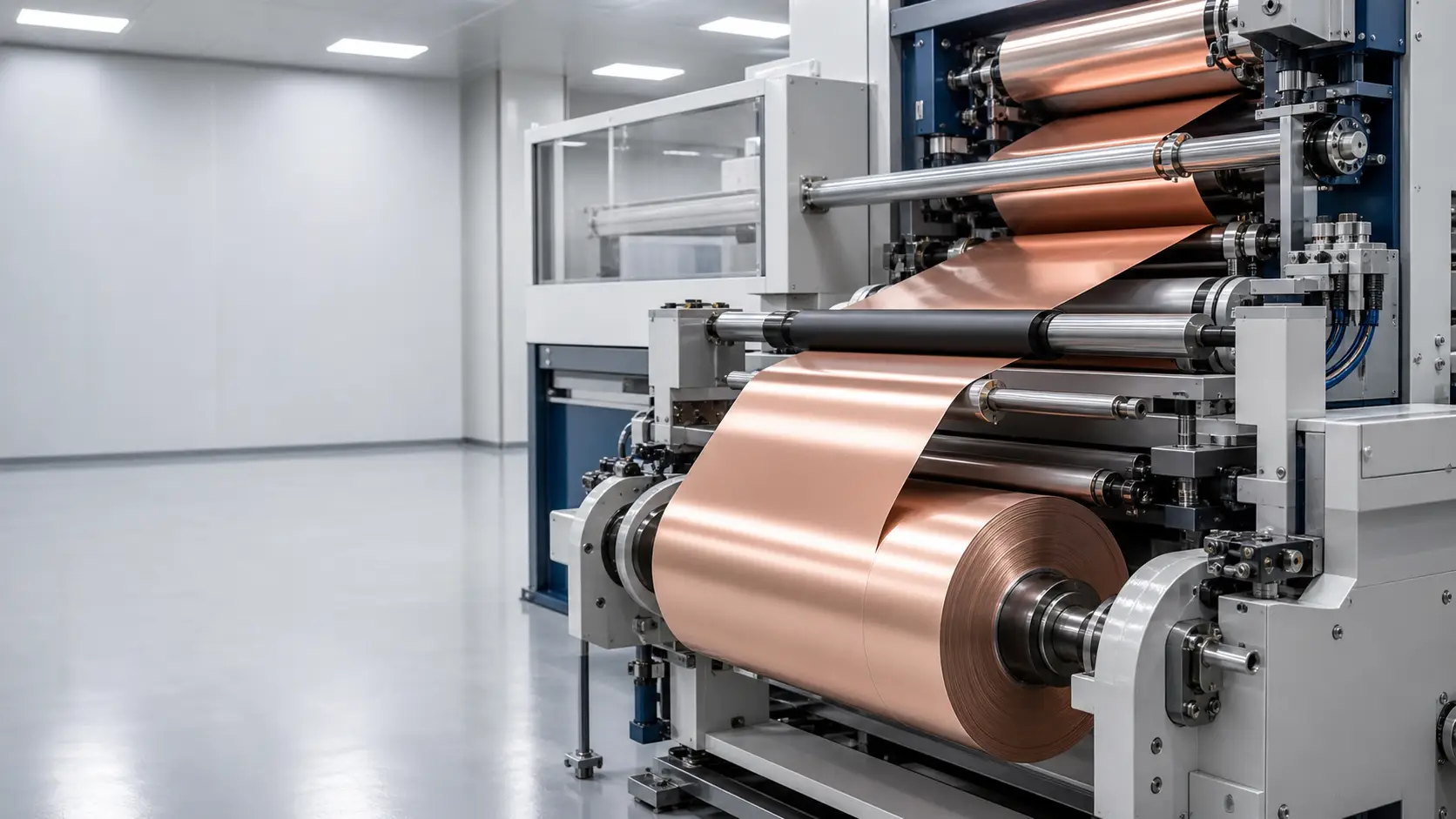
Printing and labeling machines require synchronized control of rollers, print heads, web tension and product positioning.
Frameless motors can be integrated into rotary rollers or compact axes to control speed and position without a bulky external drivetrain.
Applications include:
- Digital printing systems
- Labeling machines
- Web-handling equipment
- Rotary print mechanisms
- Packaging-code printers
- Tension-control rollers
Important design parameters include line speed, roller diameter, acceleration, tension, registration accuracy and continuous operating temperature.
Marking and Engraving Systems
Laser marking, coding and engraving equipment must position parts, fixtures or optical assemblies accurately and repeatedly.
Frameless motors can drive:
- Rotary marking fixtures
- Indexing axes
- Laser positioning mechanisms
- Engraving spindles
- Product-orientation systems
For fine positioning, the motor must be matched with an appropriate encoder, bearing arrangement and servo controller.
Material Handling
Conveyors, sorters, robotic grippers and transfer systems need controlled acceleration to move products without slipping, collision or damage.
A frameless motor can be integrated into a compact roller, rotary actuator or robotic mechanism. Direct torque control is particularly useful where the system must change speed rapidly or handle objects with different weights.
Typical applications include:
- Conveyor rollers
- Sorting mechanisms
- Pick-and-place systems
- Robotic grippers
- Rotary transfer units
- Automated storage equipment
Packaging and Assembly Machines
Packaging and assembly systems combine many short, repetitive movements. Space is often limited because several stations must fit within one machine frame.
Frameless motors can support:
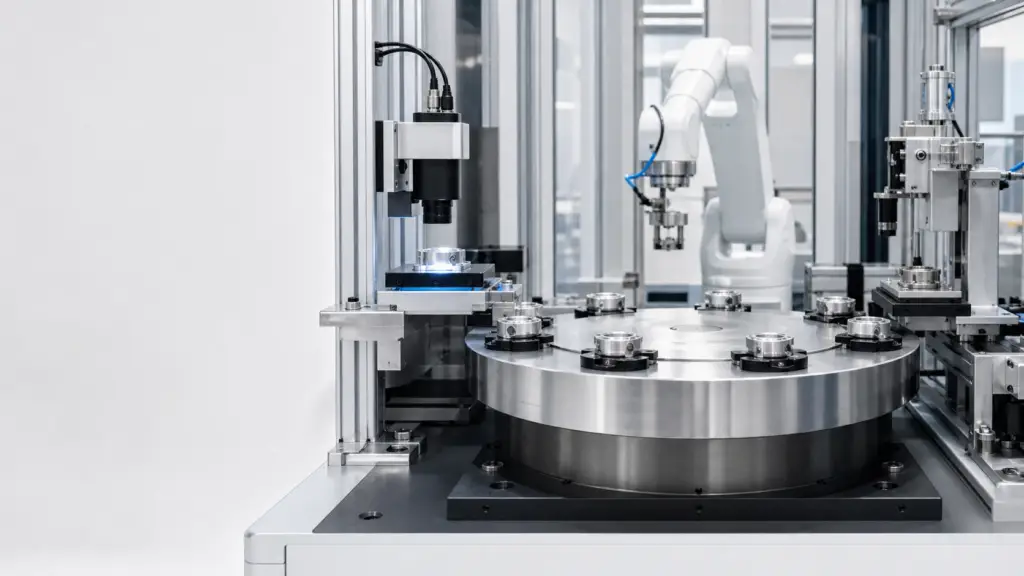
- Rotary indexing tables
- Filling and capping units
- Sealing mechanisms
- Screwdriving equipment
- Dispensing systems
- Component insertion stations
- Inspection and reject mechanisms
The motor can be designed around the machine’s rotary shaft, bearing system and available cooling structure.
Selecting a Motor for Automation
Provide the following information when requesting a motor recommendation:
- Continuous and peak torque
- Operating and maximum speed
- Acceleration and deceleration time
- Load inertia
- Radial and axial installation space
- Supply voltage
- Duty cycle
- Ambient temperature
- Cooling method
- Encoder requirements
- Expected operating life
- Environmental conditions
If the equipment operates around dust, moisture, chemicals or washdown processes, the complete enclosure and sealing design must also be considered.
Custom Automation Motors from Motor Dr
Motor Dr develops frameless motors for new equipment and existing machine redesigns.
Available customization may include:
- Diameter and stack length
- Hollow-shaft dimensions
- Torque-speed characteristics
- Voltage and winding
- Lead wires and connectors
- Hall sensors and temperature sensors
- Encoder matching
- Rotor and stator mounting features
- Integrated rotary or joint modules
Our engineers can evaluate both the electromagnetic motor design and its relationship with the mechanical structure.
Frequently Asked Questions
Can a frameless motor replace a geared servo motor?
Sometimes. The feasibility depends on required torque, speed, load inertia and installation space. A direct-drive axis may require a larger motor diameter.
Does direct drive eliminate all positioning error?
No. It removes transmission backlash from gears or belts, but total accuracy still depends on the encoder, bearings, structure, calibration and control system.
Can Motor Dr modify an existing motor size?
Yes. Depending on the project, we can adjust winding, stack length, diameter, hollow bore and interfaces around the existing machine design.
Send us your motion profile, installation dimensions and load information for a custom automation motor evaluation.